


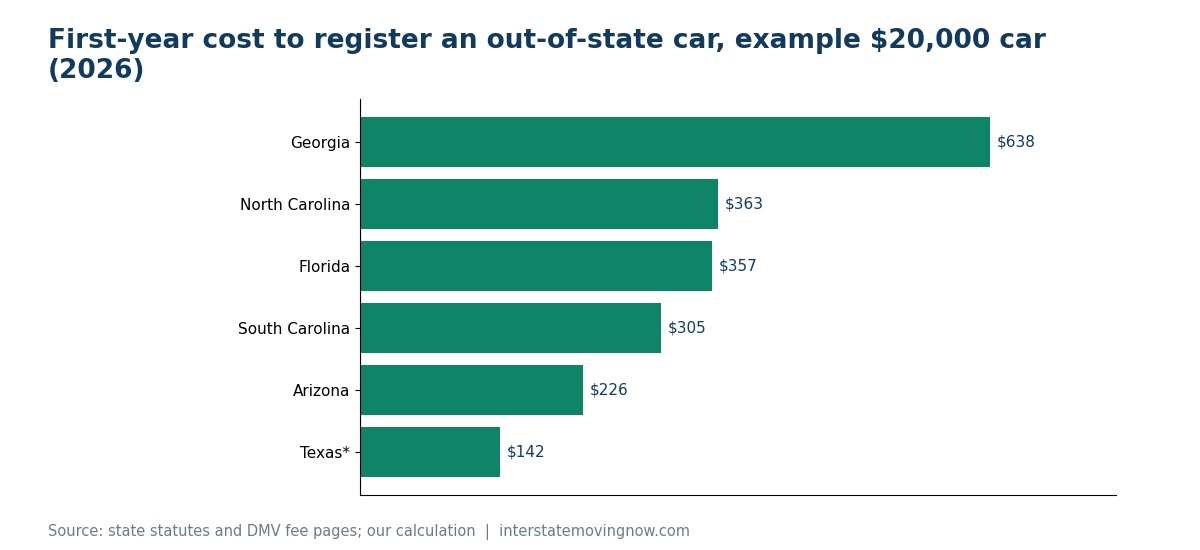
Quick answer: Registering a car you already own after moving costs about $140 to $640 in six top destination states in 2026, based on our calculation for a five-year-old car worth $20,000. Georgia is the most expensive at $638 because of its 3% title tax; Texas is the cheapest at about $142 before county fees.
Every state charges new residents to swap an out-of-state title and plates, but the fee structures differ more than most people expect. We pulled the current fees from the statutes and motor vehicle agencies of Florida, Georgia, North Carolina, South Carolina, Texas and Arizona, the states that gain the most households in the IRS migration data, and priced the same example car in each.
Last updated: November 20, 2026
Key findings
- Georgia: $638. New residents pay a one-time 3% title ad valorem tax on the car’s fair market value, $600 on a $20,000 car, plus $38 in title and tag fees.
- North Carolina: $363. The 3% highway-use tax is capped at $250 for new residents, which keeps the total close to Florida’s.
- Florida: about $357. A flat $225 initial registration fee applies to anyone without a Florida plate to transfer.
- South Carolina: $305 for two years of registration, driven by a flat $250 infrastructure maintenance fee.
- Arizona and Texas are cheapest up front at about $226 and $142, but Arizona’s vehicle license tax repeats every year.
How much does it cost to register a car after moving to a new state?
The first-year cost to register a car you bring from another state ranges from about $142 in Texas to $638 in Georgia in our six-state comparison. The table uses one example car so the states can be compared directly: a five-year-old sedan with a $20,000 market value and a $30,000 original base price. Fees are for a standard passenger car and exclude sales tax on a newly purchased vehicle, inspections and optional specialty plates.
| State | One-time new-resident tax or fee | Title fee | Registration / plate | Total for the example car |
|---|---|---|---|---|
| Georgia | $600 (3% TAVT) | $18 | $20 | $638 |
| North Carolina | $250 (3% highway-use tax, capped) | $66.75 | $46.25 | $363.00 |
| Florida | $225 (initial registration fee) | $95.75 | $36.10 | $356.85 |
| South Carolina | $250 (infrastructure maintenance fee) | $15 | $40 (two years) | $305 |
| Arizona | $214 (vehicle license tax, yearly) | $4 | $8 | $226 |
| Texas | $90 (new resident tax) | County fee | $51.75 | $141.75 + county fees |
Fee sources by state are linked in the sections below. Budget this line next to the move itself: our interstate moving cost calculator covers the transport side.
Why is Georgia the most expensive state to register an out-of-state car?
Georgia charges new residents a one-time title ad valorem tax (TAVT) of 3% of the vehicle’s fair market value, so the bill grows with the car’s value. The Georgia Department of Revenue lists the new-resident costs as a $20 annual registration fee, an $18 title fee and TAVT at 3%, and requires registration within 30 days of moving. The standard TAVT rate for vehicle purchases is 7.0%, according to the department’s TAVT page, so new residents get a lower rate than buyers.
On our $20,000 example car, TAVT alone is $600. A $40,000 SUV would owe $1,200. The upside: TAVT replaced Georgia’s annual ad valorem tax on vehicles, so after the one-time payment the yearly renewal is small.
What do Florida and the Carolinas charge new residents?
Florida, North Carolina and South Carolina all use a flat or capped one-time fee, so the cost barely changes with the car’s value. Florida Statute 320.072 imposes a $225 fee on an initial registration, which applies when you have no Florida plate to transfer. The Pinellas County Tax Collector lists $95.75 for an out-of-state used-vehicle title (including the fast-title fee) and $36.10 a year for a car weighing 2,500 to 3,499 pounds.
North Carolina’s NCDMV new-resident checklist lists a $66.75 title fee, a 3% highway-use tax capped at $250 and a $46.25 standard plate fee. South Carolina charges a $250 infrastructure maintenance fee under Section 56-3-627 on vehicles first registered in another state, plus $40 for two years of registration, and a $15 title fee under Section 56-19-420.
Why are Texas and Arizona cheaper to register in?
Texas and Arizona charge the least up front because neither levies a large one-time new-resident fee. The Texas Department of Motor Vehicles sets base registration at $50.75 plus $1 for insurance verification, and new residents pay a $90 sales-tax-related fee (or the difference between the previous state’s sales tax and Texas’s). Counties add their own fees, and drivers in 18 counties, including Dallas, Harris and Travis, need an emissions inspection first.
Arizona replaces most fees with a yearly vehicle license tax. Under ARS 28-5801, the taxable value is 60% of the manufacturer’s base retail price, reduced by 16.25% for each year of age, taxed at $2.89 per $100 after the first year. For our example car that is about $214, plus the $8 registration and $4 title fees set by ARS 28-2003. Because the tax repeats yearly, Arizona costs more than Georgia over a few years for a newer car.
How long do you have to register your car after moving?
Most top destination states give new residents 30 to 45 days to title and register a car. Texas and Georgia allow 30 days from the move. South Carolina allows 45 days under Section 56-3-210(F), as long as your old registration has not expired. North Carolina requires registration once you take a job in the state or when the reciprocity period with your old state ends, usually 30 days, whichever comes first, according to the NCDMV checklist.
| State | Deadline after moving | Before you go to the office |
|---|---|---|
| Texas | 30 days | Inspection (emissions in 18 counties), Texas insurance |
| Georgia | 30 days | Georgia insurance in the state database |
| North Carolina | On starting a job or end of reciprocity (usually 30 days) | NC driver license first, NC insurance |
| South Carolina | 45 days | SC driver license, proof of insurance |
Florida and Arizona deadlines depend on when residency starts, so check with the county tax collector or the Arizona MVD before you schedule. Late registration can bring penalties on top of the fees above.
Our analysis: what one car costs to register in each state over three years
The one-time fees matter most in year one, but the yearly costs decide the three-year total. Using the same example car, here is our estimate of the state fees over the first three years, holding registration fees flat and applying Arizona’s 16.25% yearly value reduction:
| State | Year 1 | Years 2 and 3 (state fees) | Three-year total |
|---|---|---|---|
| Arizona | $226 | $180 + $150 VLT, plus $8 registration each year | $572 |
| Georgia | $638 | $20 + $20 | $678 |
| Florida | $356.85 | $36.10 + $36.10 | $429.05 |
| North Carolina | $363.00 | Plate renewal yearly (fee varies) | $363 + renewals |
| South Carolina | $305 | $0 in year 2 (two-year registration), $40 renewal in year 3 | $345 |
| Texas | $141.75 | $51.75 + $51.75 | $245.25 + county fees |
The decision rule is simple: in Georgia, the car’s value drives the bill; in Florida and the Carolinas, the flat fee does; in Arizona, a newer car costs more every year. North Carolina and South Carolina also levy local property tax on vehicles, which this comparison does not include.
Methodology and sources
We took each fee from the state statute or the motor vehicle agency page linked above, as published in November 2026. Florida title and registration amounts come from the Pinellas County Tax Collector, one of the state’s county collectors, and can differ slightly by county service fees. The example car (market value $20,000, original base retail price $30,000, five years old, standard passenger plate) is an illustration, not an average. Totals exclude sales tax on a car bought at the time of the move, inspections, county and local add-ons, driver license fees and specialty plates. Arizona’s three-year figures apply the statutory 16.25% yearly value reduction.
FAQ
Do I pay sales tax again when I register my car in a new state?
Usually not on a car you already owned and registered elsewhere. Georgia instead charges new residents a 3% title tax, and Texas charges a $90 new-resident tax or the difference between your old state’s sales tax and Texas’s. A car bought shortly before the move can trigger use tax, so keep the purchase paperwork.
Is the North Carolina highway-use tax always capped at $250?
The $250 cap applies to vehicles already titled in another state that new residents bring with them, according to the NCDMV new-resident checklist. A car bought from a North Carolina dealer pays the full 3% of its value with no new-resident cap.
What happens if I register late?
Each state sets its own penalties. Georgia, Texas and South Carolina tie the deadline to the date you moved, and driving on expired out-of-state tags after that can bring a ticket. Register within the first month and book any required inspection early.
Does the moving company need my new registration?
No. If your car rides on an auto carrier, the shipper needs the current registration and proof of insurance from your old state. You register after delivery. Our car shipping cost report covers the transport side.
Planning the full budget for your move? Start with the cost of moving by state and add these fees to the first-month list.








No Comments